


The Evolution of Legal and Compliance Solutions in 2026
The legal and regulatory landscape is more complex than ever before. Businesses today face growing demands. These come from vast data volumes, ever-changing laws, and new risks. Effectively navigating these challenges is crucial for success and stability.
We will explore Legal and Compliance Solutions. We will look at why these solutions are essential for modern businesses. We will also examine the leading providers in this field.
Our discussion will cover the specific services they offer. This includes eDiscovery, contract management, and advanced AI-powered tools. We will dive into how these innovations enhance legal and compliance operations. We will also highlight the benefits of outsourcing these services.
Finally, we will explore how these solutions address key challenges like data privacy and risk mitigation. We will also guide you on selecting the best partner for your needs.
The year 2026 finds businesses operating within an increasingly intricate web of regulations, data proliferation, and global interconnectedness. What were once disparate legal and compliance functions are now converging into integrated, technology-driven solutions. This evolution is not merely about adopting new tools; it’s about fundamentally transforming how organizations manage risk, maintain integrity, and ensure operational efficiency.

The sheer volume of data generated by individuals and enterprises alike has necessitated a shift. A single person can generate hundreds of gigabytes of data per month, per device, creating a massive challenge for legal teams tasked with discovery and data governance. This data explosion, coupled with the rapid pace of regulatory change, has rendered traditional, manual approaches obsolete.
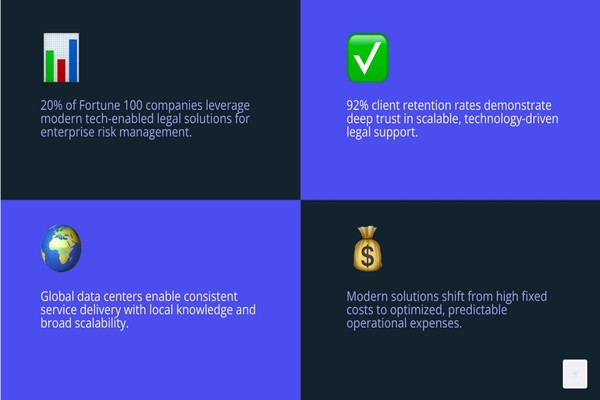
Modern legal and compliance solutions are characterized by their integration of advanced technology with expert human oversight. We see this trend across the board, with leading providers emphasizing technology-enabled expertise in areas like electronic discovery, analytics, legal support, and compliance. These solutions offer a global reach, with data centers spanning continents, allowing businesses to combine local knowledge with broad capabilities. This ensures scalability and consistent service delivery, regardless of geographic location.
For instance, many large corporations, including 20% of the Fortune 100, now actively leverage sophisticated legal services platforms to manage their complex operations. This widespread adoption underscores the critical role these solutions play in enterprise-level risk management and operational excellence. The long-term commitment from clients further validates this approach, with some service providers reporting that 92% client retention rates and a significant portion of their clientele (41% for over 5 years, 20% for over 10 years) remain with them for extended periods, indicating deep trust and consistent value delivery.
The comparison between traditional legal support and modern tech-enabled solutions reveals a stark difference in efficiency, cost, and strategic value.
Feature Traditional Legal Support Modern Tech-Enabled Solutions Approach Manual, reactive, siloed Proactive, integrated, technology-driven Data Handling Labor-intensive, prone to errors, limited scalability Automated, accurate, highly scalable, AI-powered Cost Structure High fixed costs, unpredictable litigation expenses Optimized, predictable, reduced operational costs Speed & Efficiency Slow document review, lengthy compliance processes Rapid processing, real-time insights, 24/7 operations Risk Mitigation Dependent on human judgment, potential for oversight Enhanced by predictive analytics, continuous monitoring Global Reach Limited by local presence Seamless global operations, consistent standards Strategic Value Primarily defensive, cost center Strategic asset, competitive advantage, innovation driver This evolution is particularly crucial for specialized fields. For example, businesses operating in highly regulated environments such as maritime operations increasingly rely on sophisticated legal and compliance frameworks to navigate international laws, environmental regulations, and safety standards. Ensuring robust Maritime legal compliance requires not just legal expertise but also advanced technological solutions that can track, interpret, and apply complex rules across diverse jurisdictions and operational contexts.
Core Components of Modern Legal and Compliance Solutions
At the heart of these advanced offerings are several key components designed to address the multifaceted needs of contemporary businesses:
- eDiscovery (Electronic Discovery): This involves the identification, collection, processing, review, and production of electronically stored information (ESI) for legal cases. Modern solutions leverage AI to drastically reduce the time and cost associated with this process.
- Contract Lifecycle Management (CLM): From creation and negotiation to execution and renewal, CLM solutions automate and streamline the entire contract process. This ensures compliance, reduces risk, and unlocks the full potential of contractual agreements.
- Regulatory Tracking and Intelligence: Keeping pace with the ever-changing regulatory landscape is a monumental task. These solutions provide real-time alerts, plain-English interpretations of complex regulations, and tools to map regulatory requirements to internal controls.
- Information Governance: This encompasses policies and procedures for managing information from its creation through its disposition. It’s crucial for data privacy, security, and ensuring that information is accessible and defensible when needed.
The benefits of adopting these solutions are tangible and significant. Businesses gain considerable advantages through outsourcing legal and compliance services. For instance, many legal department leaders are actively cutting costs, with 61% adopting new or better technologies to simplify workflows and reduce manual processes. This strategic shift can lead to substantial cost reductions, such as a financial services firm saving 90% on costs by utilizing a 24-hour attorney team model. These models often provide round-the-clock support, ensuring continuous operation and rapid response to legal needs.
Selecting the Right Legal and Compliance Solutions Partner
Choosing the right partner is paramount for successful implementation and sustained benefits. Businesses should consider several critical factors:
- Expertise: Look for providers with deep legal and compliance knowledge, coupled with technological prowess. A strong track record and a team of seasoned professionals are indicators of reliable expertise.
- Technology Integration: The partner’s solutions should seamlessly integrate with your existing systems and offer advanced, AI-powered tools that enhance efficiency and accuracy.
- Client-Centric Reporting: Transparency and clear communication are vital. A good partner will provide detailed, actionable reports and maintain open lines of communication.
- Global Infrastructure: For businesses with international operations, a partner with a robust global infrastructure can ensure consistent service delivery and compliance across different jurisdictions.
- Client Retention: High client retention rates, like the 41% of clients staying for over 5 years or 20% for over 10 years reported by some providers, signal strong client satisfaction and long-term value.
- Audit Readiness: The partner should help you maintain continuous audit readiness, demonstrating structured oversight and reducing audit risk with regulatory-aligned outputs and a centralized system of records.
Furthermore, investing in comprehensive Legal compliance training for internal teams is crucial. Even with outsourced services, understanding regulatory requirements and internal policies empowers employees to act as the first line of defense against compliance breaches. A strong partner can often assist in developing or recommending such training programs, ensuring that your entire organization is aligned with compliance best practices.
Leveraging AI for eDiscovery and Debt Defense
The integration of Artificial Intelligence (AI) has revolutionized legal and compliance operations, particularly in areas like eDiscovery and proactive compliance monitoring. AI’s ability to process vast amounts of data, identify patterns, and automate repetitive tasks has led to unprecedented efficiencies and cost savings.
The challenge of data volume is immense; as mentioned, a single person can generate hundreds of gigabytes of data monthly. This makes manual review and analysis impractical, if not impossible. Legal teams are facing rising demands with fewer resources, making AI not just an advantage, but a necessity.
AI-powered solutions are leading to remarkable improvements:

- An 80% reduction in document review time.
- A 67% reduction in total managed review costs.
These figures highlight the transformative power of AI in streamlining what were once some of the most labor-intensive and expensive aspects of legal work. It’s no wonder that 83% of legal operations professionals are planning to use AI to improve eDiscovery document-review efficiency.
The concept of “human-in-the-loop” validation is critical here. While AI can automate much of the initial heavy lifting, human experts remain essential for overseeing the process, refining algorithms, and making final, nuanced judgments that require legal acumen. This hybrid approach ensures both efficiency and judicial defensibility.
AI’s capabilities extend beyond corporate legal teams to consumer-facing legal challenges. For individuals facing debt lawsuits, AI can play a crucial role in providing strategic insights and automating aspects of their defense. Tools leveraging AI can analyze legal documents, identify key deadlines, and even help draft responses. This is particularly relevant for those seeking AI civil judgment defense, where timely and accurate responses can significantly impact outcomes.
Transforming eDiscovery with AI
eDiscovery, the process of identifying and collecting electronic data for legal cases, has been profoundly transformed by AI.
- Predictive Coding: AI algorithms can learn from human reviewers to identify relevant documents, drastically reducing the volume of data that requires manual inspection.
- Document Abstraction: AI can quickly extract key information from documents, such as dates, parties, and clauses, making contract review and due diligence much faster.
- Judicial Defensibility: Modern AI tools are designed to ensure that the collection and review process is transparent, auditable, and stands up to judicial scrutiny. This is crucial as technology must be ‘judicially approved’ to be effective in legal contexts.
- Real-time Risk Analytics: AI can analyze data continuously to identify potential risks or compliance issues as they emerge, allowing for proactive mitigation.
- Case Strategy Optimization: By rapidly processing and analyzing vast datasets, AI provides legal teams with deeper insights into their cases, helping them develop more effective strategies.
While AI adoption for eDiscovery is high, with 83% of legal ops professionals planning its use, there’s still room for growth in other areas. For example, 76% of investigation teams still rely on manual review, indicating a significant opportunity for further AI integration to reduce manual effort and enhance accuracy.
AI-Powered Compliance Monitoring
AI’s impact on compliance monitoring is equally significant, enabling businesses to move from reactive to proactive risk management.
- Transaction Monitoring: In financial services, AI systems continuously monitor transactions for suspicious activities that might indicate fraud or money laundering.
- Sanctions Checking: AI automates the process of screening individuals and entities against global sanctions lists, a critical component of Anti-Money Laundering (AML) frameworks.
- AML Frameworks: AI enhances the effectiveness of AML programs by identifying complex patterns and anomalies that might be missed by human reviewers.
- Automated Privacy Management: With regulations like CCPA, managing data privacy is complex. AI automates tasks such as Data Subject Access Requests (DSAR) and ensures compliance with privacy mandates. Some solutions boast 99% accuracy in handling data requests, meeting 100% of deadlines for a global tech firm.
- Continuous Compliance: AI systems can continuously track regulatory changes and automatically assess their impact on internal policies and controls, ensuring that businesses remain compliant in real-time.
Navigating Regulatory Changes and Risk Mitigation
The regulatory landscape is a dynamic environment, constantly evolving with new laws, amendments, and enforcement priorities. For businesses, staying ahead of these changes is a fundamental challenge that directly impacts their financial stability and reputation. Modern legal and compliance solutions are specifically designed to help organizations navigate this complexity, transforming compliance from a burden into a strategic advantage.
One of the most critical aspects of this navigation is understanding the sheer scale of regulatory requirements. Some platforms track over 82,000 plain-English requirements across 80+ topics and 150+ subtopics, providing a comprehensive view of the obligations businesses face. This level of detail, coupled with real-time updates, ensures that organizations are always aware of their compliance posture.
Key strategies and tools for navigating regulatory changes include:
- Preemption Likelihood Indicators: These predictive tools help businesses understand where federal laws might supersede state-level requirements, providing clarity and enabling proactive risk management.
- Plain-English Guidance: Complex legal jargon is translated into actionable, understandable guidance, making it easier for non-legal teams to implement compliance measures.
- Horizontal Risk Assessments: By analyzing peer search patterns and industry trends, solutions can identify emerging risks and allow businesses to assess their exposure before issues escalate.
- Regulatory Change Management: Automated systems track revisions in state and federal requirements, mapping them directly to internal controls and alerting relevant stakeholders.
Key Regulatory Focus Areas in 2026:
- FINRA Electronic Communication Reviews: Financial institutions must continuously monitor and review electronic communications, including social media, to ensure compliance with FINRA regulations.
- KYC (Know Your Customer) Protocols: Enhanced KYC procedures are critical for preventing financial crime, requiring robust identity verification and due diligence processes.
- SRA (Solicitors Regulation Authority) Standards: For law firms in the UK, adhering to SRA standards is paramount, especially with updated guidance focusing on areas like high-volume consumer claims management.
- HMRC (HM Revenue & Customs) Framework Changes: Conveyancing firms, for example, are facing significant HMRC regulatory framework changes for tax agents, with a deadline of May 2026 to adapt.
Addressing Data Privacy and Cyber Security
Data privacy and cybersecurity have risen to the forefront of regulatory concerns, becoming a board-level priority for 62% of organizations. With regulations like CCPA and GDPR, businesses face stringent requirements for protecting personal data.
- Subject Rights Requests (DSAR Automation): Data Subject Access Requests (DSARs) are a common and resource-intensive aspect of privacy compliance. AI-powered solutions automate the process of identifying, collecting, and redacting personal data in response to these requests, ensuring 99% accuracy and timely fulfillment.
- Post-Data Breach Response: In the event of a data breach, rapid and compliant response is crucial. Solutions provide frameworks and tools for incident management, notification, and remediation, minimizing legal and reputational damage.
- Information Governance: Implementing robust information governance policies ensures that data is managed throughout its lifecycle, from creation to secure disposition, aligning with privacy mandates.
- Privacy Management Software Investment: Recognizing the complexity, 49% of key decision-makers identify privacy management software as their top technology investment, highlighting its importance in mitigating privacy risk.
Operationalizing Compliance Across Global Teams
For multinational corporations, operationalizing compliance across diverse global teams presents unique challenges.
- Multi-Lingual Support: Providers offer multi-lingual teams to ensure effective communication and compliance adherence in various regions, facilitating ‘follow-the-sun’ support models.
- Centralized System of Records: Moving away from fragmented manual workflows, a centralized system of records ensures that all compliance activities, documents, and policies are accessible and consistent globally.
- Internal Control Mapping: Regulations are mapped directly to internal business processes and controls, ensuring that compliance is embedded into daily operations rather than being an afterthought.
- Efficiency Gains: By streamlining processes and leveraging technology, businesses can achieve significant efficiency improvements, such as a 60% time savings in compliance reviews, allowing teams to focus on higher-value activities.
Strategic Self-Defense Against Debt Collection and Litigation
While legal and compliance solutions often focus on corporate governance and regulatory adherence, they also play a critical role in empowering individuals and businesses to defend themselves against common legal challenges, such as debt collection and eviction. The principles of understanding legal processes, leveraging technology, and seeking expert guidance are equally applicable here.
Imagine receiving an urgent legal summons or a 3-day eviction notice. The immediate reaction might be panic, but understanding your rights and the procedural steps is crucial for effective self-defense. Ignoring such notices can lead to severe consequences, including default judgments, wage garnishment, or immediate displacement.
The Fair Debt Collection Practices Act (FDCPA) provides federal protections against abusive debt collection practices, and understanding these rights is the first step in strategic self-defense. One key protection is the right to send a debt validation letter, which legally requires collectors to prove the debt is yours and they have the right to collect it. This can often halt collection efforts or even invalidate the debt.
Responding to a debt lawsuit involves several critical steps to avoid a default judgment:
- File a Written Answer: This is a formal response to the court, addressing each claim made by the plaintiff (the debt collector). You can admit, deny, or state you lack knowledge to admit or deny each claim.
- Assert Affirmative Defenses: These are legal arguments that, even if the plaintiff’s claims are true, prevent them from winning the case. Common affirmative defenses include the statute of limitations (the legal deadline for filing a lawsuit) or proving the debt is not yours.
- Understand Deadlines: Strict deadlines, such as a 5-day window to file a written response after receiving a court date, must be adhered to. Missing these can result in a default judgment against you.
- Consider Settlement Negotiation: If the debt is legitimate, negotiating a settlement for less than the original amount can be a viable option. This often involves proposing a lump sum payment or a payment plan.
- Motion to Compel Arbitration: If your original credit agreement includes an arbitration clause, you might be able to file a motion to compel arbitration, moving the case out of public court into a private arbitration process.
| Step | Description | | 1. | | 2. | | ** | | ** | | What are the legal implications of AI in compliance? | AI legal compliance involves navigating complex regulatory landscapes, ensuring data privacy, and mitigating risks. It’s essential for businesses to stay ahead of evolving laws and maintain operational integrity. | AI in compliance brings legal implications related to data privacy, algorithmic bias, transparency, and accountability. Businesses must ensure their AI tools comply with regulations like GDPR and CCPA, manage data ethically, and have clear oversight mechanisms to address potential legal challenges arising from AI decisions. | | How does AI improve eDiscovery and document review efficiency? | AI significantly reduces manual effort in eDiscovery and document review, leading to faster processing and cost savings. | AI transforms eDiscovery and document review by automating tasks like identifying relevant documents, categorizing data, and extracting key information. This leads to an ~80% reduction in document review time and a 67% reduction in total managed review costs. AI tools use predictive coding and machine learning to prioritize documents, allowing legal teams to focus on high-value analysis and strategy. | | What should businesses consider when selecting a compliance partner? | Selecting the right compliance partner is crucial for successful implementation and sustained benefits. | When choosing a compliance partner, businesses should prioritize deep expertise in legal and regulatory matters, robust technology integration, and a proven track record of client satisfaction (e.g., high client retention rates like 92%). Factors like global infrastructure, transparent reporting, and the ability to offer comprehensive legal compliance training are also vital. The partner should demonstrate a human-in-the-loop approach, combining AI efficiency with expert oversight. |
Conclusion
The journey through the complex legal and compliance landscape of 2026 demands a sophisticated, integrated approach. As we have explored, Legal and Compliance Solutions are no longer optional but a fundamental pillar for business success, offering unparalleled efficiency improvements, substantial cost reduction, and robust risk mitigation.
By leveraging the power of AI, embracing technology-enabled services, and partnering with expert providers, businesses can transform their legal and compliance functions from reactive cost centers into proactive strategic assets. The future of legal operations is characterized by data-driven decision-making, continuous monitoring, and agile adaptation to regulatory changes.
For organizations navigating everything from intricate global regulations to the personal challenges of debt defense, these solutions offer clarity, control, and confidence. The strategic advantage gained through effective compliance and legal management ensures not only adherence to the law but also sustained growth and resilience in an ever-evolving world.