

The Regulatory Framework of Workplace Compliance in 2026
The foundation of workplace compliance in 2026 is built on a complex interplay among federal laws and the agencies tasked with enforcing them. Understanding this intricate “ecosystem” is paramount for any business aiming for sustained success. This framework doesn’t just dictate how we operate; it shapes our responsibilities towards our employees and the broader society.
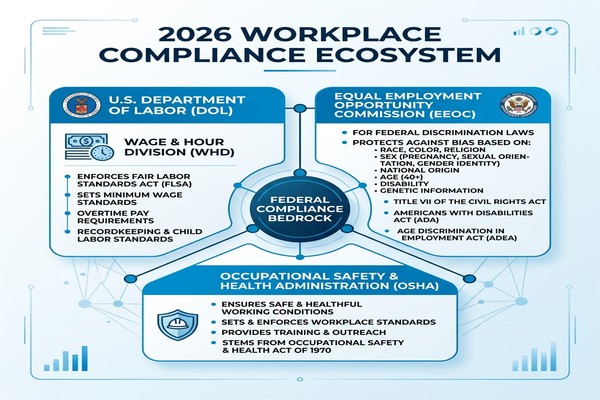
At the federal level, several key agencies and their corresponding statutes form the bedrock of compliance:
- U.S. Department of Labor (DOL): This overarching department houses several critical divisions, including the Wage and Hour Division (WHD), which enforces the Fair Labor Standards Act (FLSA). The FLSA sets federal minimum wage, overtime pay, recordkeeping, and child labor standards.
- Equal Employment Opportunity Commission (EEOC): The EEOC is responsible for enforcing federal laws that make it illegal to discriminate against a job applicant or an employee because of the person’s race, color, religion, sex (including pregnancy, sexual orientation, and gender identity), national origin, age (40 or older), disability, or genetic information. Key statutes include Title VII of the Civil Rights Act, the Americans with Disabilities Act (ADA), and the Age Discrimination in Employment Act (ADEA).
- Occupational Safety and Health Administration (OSHA): OSHA ensures safe and healthful working conditions for workers by setting and enforcing standards and by providing training, outreach, education, and assistance. Its authority stems from the Occupational Safety and Health Act of 1970.
- U.S. Citizenship and Immigration Services (USCIS): While not solely focused on employment, USCIS plays a role through its enforcement of immigration laws, particularly in Form I-9 verification, which confirms the identity and employment authorization of individuals hired in the United States.
Employer thresholds are a critical component that determines which specific obligations apply. For instance, the FLSA generally covers employers with at least $500,000 in annual business, employers involved in interstate commerce, and individual employees whose work directly impacts interstate commerce. Title VII and the ADA typically apply to employers with 15 or more employees, while the ADEA requires 20 or more. The Family and Medical Leave Act (FMLA) applies to employers with 50 or more employees within a 75-mile radius. Even small employers with fewer than 10 employees, while exempt from routine OSHA inspections and some recordkeeping, are still subject to all OSHA standards and unannounced inspections. This layered applicability means that businesses must carefully assess their size and operational scope. The regulatory footprint is vast, with at least seven federal agencies actively enforcing workforce compliance, each with its own set of penalties and oversight.
To illustrate, consider the following general comparison of employer size thresholds and applicable federal laws:
[TABLE] comparing employer size thresholds and applicable federal laws
Employer Size Key Federal Laws/Obligations (Examples) 1-14 Employees FLSA (minimum wage, overtime, child labor), I-9 Verification, OSHA (all standards, unprogrammed inspections) 15+ Employees Title VII (anti-discrimination), ADA (disability accommodation), GINA (genetic information) 20+ Employees ADEA (age discrimination) 50+ Employees (within 75 miles) FMLA (family and medical leave) 100+ Employees WARN Act (mass layoff/plant closing notices) Note: This table provides general guidance. Specific exemptions and additional state/local laws may apply.
Core Pillars of Federal Workplace Compliance
Beyond the agencies, the substance of compliance rests on several core pillars:
- Wage and Hour: This encompasses adherence to minimum wage laws, proper calculation and payment of overtime for non-exempt employees (1.5 times the regular rate for hours over 40 in a workweek), and accurate tracking of all hours worked. Misclassification of employees as independent contractors to avoid these obligations remains a significant risk.
- Safety Standards: OSHA mandates a safe workplace, requiring employers to identify and mitigate hazards. This includes specific standards for various industries (e.g., construction, general industry) and the “General Duty Clause,” which requires employers to provide a workplace free from recognized hazards likely to cause death or serious physical harm, even if no specific standard exists.
- Anti-Discrimination: Employers must ensure fair treatment in all aspects of employment, from hiring and promotions to compensation and termination, without regard to protected characteristics. This also includes providing reasonable accommodations for disabilities and religious practices, as well as preventing harassment.
- Worker Classification: Correctly classifying workers as employees or independent contractors is crucial. Federal agencies like the IRS and DOL use various tests (e.g., behavioral, financial, relationship-control, and economic-reality tests) to determine classification, and misclassification can lead to significant back taxes, penalties, and back wages.
- I-9 Verification and E-Verify: Employers must verify the identity and employment eligibility of all new hires using Form I-9. While E-Verify is voluntary for most employers, it is mandatory for federal contractors and in some states. Penalties for I-9 violations can range from $272 to $2,701 per paperwork violation.
- Federal Contractors and Prevailing Wages: Businesses contracting with the federal government face additional layers of compliance. This includes adherence to Executive Orders prohibiting discriminatory DEI activities, as well as laws such as the Davis-Bacon Act and the Service Contract Act, which mandate prevailing wages and benefits for workers on federally funded projects. The Department of Justice’s National Fraud Enforcement Division also increases scrutiny on fraud matters for federal contractors.
Navigating Workplace Compliance for Remote and Hybrid Teams
The shift towards remote and hybrid work models has introduced new compliance complexities. What was once straightforward, like posting physical labor law notices, now requires careful consideration of electronic posting requirements, which remain a contested area.
- Jurisdictional Nexus: Remote work creates a jurisdictional nexus in every state where an employee resides. This means employers must comply with each state’s labor laws, which can vary significantly in terms of minimum wage, paid sick leave, family leave, and even specific anti-discrimination protections. State-specific tax and leave requirements become critical, demanding meticulous tracking and adherence.
- Data Privacy and Security: With employees accessing company data from various locations, ensuring robust data privacy and security protocols is paramount. Compliance with frameworks such as SOC 2 (Service Organization Control 2) and SOX (Sarbanes-Oxley Act) for financial reporting, along with general data protection regulations, is becoming increasingly challenging. Companies must protect sensitive employee and customer information, especially when dealing with export-controlled data or health records.
- Digital Visitor Management and Workplace Technology: For hybrid models, managing who enters physical workplaces, tracking their health status (as seen during the COVID-19 pandemic), and securing visitor data requires advanced solutions. Leveraging workplace technology, such as digital visitor management systems, helps automate compliance, protect health data, and restrict access to authorized personnel, contributing to overall workplace security. Building a culture where compliance is integrated into daily operations, even remotely, is vital for long-term success.
Protecting Worker Rights and Safety Standards
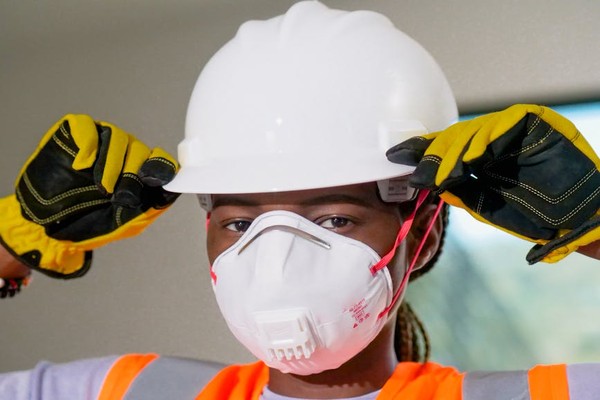
At the heart of workplace compliance lies the imperative to protect worker rights and ensure their safety. This commitment extends beyond mere legal adherence; it fosters trust, boosts morale, and ultimately enhances productivity. OSHA’s mandate is clear: every worker has the right to a safe workplace, free from recognized hazards.
One of the most fundamental aspects of workplace safety is the General Duty Clause. This crucial provision requires employers to furnish a place of employment free from recognized hazards that are causing or are likely to cause death or serious physical harm to employees, even if no specific OSHA standard addresses that hazard. This clause is often applied to emerging risks such as heat illness, workplace violence, and ergonomic hazards when specific regulations are not yet in place.
Beyond the General Duty Clause, specific OSHA standards dictate protections against various hazards:
- Hazard Communication: Ensures employees are informed about hazardous chemicals in the workplace through labels, safety data sheets (SDS), and training.
- Fall Protection: A leading cause of fatalities in construction, fall protection standards mandate measures like guardrails, safety nets, and personal fall arrest systems, typically at heights of 6 feet in construction and 4 feet in general industry.
- Respiratory Programs: Required when employees are exposed to airborne contaminants, necessitating fit testing, medical evaluations, and proper respirator use and maintenance.
- Heat Illness Prevention: While federal OSHA has no specific standard, state plans, such as Cal/OSHA, have robust requirements for providing water, shade, and rest breaks in hot environments.
Workers are also empowered with significant rights to ensure their safety. They can request OSHA inspections, participate in them, and refuse hazardous work without punishment if certain conditions are met. Crucially, whistleblower protections shield employees from retaliation for reporting safety concerns, filing complaints, or participating in OSHA investigations. However, these protections often come with strict timelines, such as the 30-day window for filing a whistleblower complaint after an alleged retaliatory action. For organizations seeking to streamline their safety protocols and foster a more secure environment, exploring comprehensive Workplace compliance solutions can provide invaluable tools and guidance.
A cornerstone of hazard control is the NIOSH Hierarchy of Controls, which prioritizes interventions:
- Elimination: Physically remove the hazard.
- Substitution: Replace the hazard.
- Engineering Controls: Isolate people from the hazard.
- Administrative Controls: Change the way people work.
- Personal Protective Equipment (PPE): Protect the worker with equipment (considered the last resort).
Common Hazards and Workplace Compliance Audits
Workplace hazards are diverse and require constant vigilance. Beyond the obvious, employers must address:
- Physical Exposures: Noise, vibration, radiation, extreme temperatures.
- Chemical Hazards: Exposure to toxic substances, fumes, gases, and mists.
- Ergonomic Risks: Poor workstation design, repetitive motions, and heavy lifting, leading to musculoskeletal disorders.
- Lockout/Tagout (LOTO): Procedures to prevent unexpected startup of machinery during maintenance or servicing, a frequently cited OSHA standard.
- Bloodborne Pathogens: Standards to protect workers from exposure to blood or other potentially infectious materials, particularly in healthcare settings.
To effectively manage these risks, internal audits are essential. These proactive assessments help identify vulnerabilities before an incident occurs or an inspection takes place. Audits should include thorough hazard identification processes and the review of equipment, processes, and work environments. Maintaining up-to-date safety data sheets (SDS) for all hazardous chemicals is a key component of hazard communication and audit readiness.
Reporting and Recordkeeping Protocols
Accurate and timely reporting and recordkeeping are non-negotiable aspects of workplace safety compliance. They provide critical data to prevent future incidents and demonstrate compliance with regulations.
- OSHA Form 300 (Log of Work-Related Injuries and Illnesses): Employers with 10 or more employees (in non-exempt industries) must maintain this log to record all recordable work-related injuries and illnesses.
- OSHA Form 300A (Summary of Work-Related Injuries and Illnesses): An annual summary of the Form 300 data, which must be posted from February 1 to April 30 of the following year.
- OSHA Form 301 (Injury and Illness Incident Report): Detailed report for each recordable injury or illness.
- Electronic Submission: As of 2024, establishments with 250 or more employees, and those with 20-249 employees in high-hazard industries, must electronically submit their Form 300A data to OSHA annually.
- Fatality Reporting: Employers must report all work-related fatalities to OSHA within 8 hours.
- Hospitalization Reporting: All in-patient hospitalizations, amputations, or losses of an eye must be reported to OSHA within 24 hours.
Beyond safety, other federal laws mandate specific recordkeeping:
- Payroll Records: The FLSA requires employers to keep payroll records for at least 3 years.
- Time Records: Records of hours worked must be retained for at least 2 years.
- I-9 Forms: Must be retained for three years after the date of hire, or one year after the date employment ends, whichever is later.
- FMLA Records: Employers must maintain records related to FMLA leave for at least three years.
Diligent adherence to these reporting and recordkeeping requirements is not merely administrative; it forms a crucial part of an employer’s defense in the event of an inspection or legal challenge.
Managing Multi-State Obligations and State-Specific Overlays
For businesses operating across state lines, workplace compliance transforms into a complex “layered stack” of regulations. Federal laws establish a baseline, but state and even local jurisdictions often impose additional requirements, sometimes more stringent. This creates a challenging environment for multi-state employers who must navigate a patchwork of disparate rules.
One of the most prominent examples of state divergence is in workplace safety. While federal OSHA covers most private-sector employers, 22 states and 2 U.S. territories operate OSHA-approved State Plans. These state plans must be “at least as effective” as federal OSHA but frequently exceed federal standards. Cal/OSHA, for instance, is renowned for its comprehensive regulations, including specific standards for heat illness prevention, which go beyond federal requirements. Multi-state employers with operations in these jurisdictions must comply with the state agency’s standards rather than federal OSHA.
State laws also significantly impact worker classification. While federal agencies like the DOL and IRS have their tests, states like California have adopted stricter criteria, such as the ABC test (as codified by AB5), which presumes a worker is an employee unless specific conditions are met. This can lead to a worker being classified as an independent contractor under federal law but an employee under California law, creating compliance headaches and potential misclassification liabilities.

Other areas where state labor codes frequently diverge from or exceed federal requirements include:
- Minimum Wage Disparity: While the federal minimum wage is $7.25 per hour, many states and numerous cities have set higher minimum wages. In 2024, California’s minimum wage was $16.00 per hour, for example.
- Paid Sick Leave: Many states and localities mandate paid sick leave, often with specific accrual rates, usage rules, and carryover provisions that differ from federal guidelines.
- Harassment Training: Some states, like California, require mandatory anti-harassment training for all employees and supervisors, with specific content and frequency requirements.
- Family and Medical Leave: While FMLA is federal, several states have their own family and medical leave laws, some of which offer broader coverage or more generous benefits than the federal act.
- New-Hire Reporting: All states require employers to report new hires to a state new-hire reporting registry under federal law, but the specific reporting mechanisms and timelines can vary.
The concept of multi-state nexus means that an employer’s obligations are triggered in every state where they have employees, even if those employees work remotely. This necessitates a robust system for tracking and applying the correct state-specific laws regarding wages, hours, benefits, leave, and even tax withholding.
[INFOGRAPHIC] illustrating the “layered stack” of federal vs. state compliance
Imagine an infographic showing a pyramid or stack. The base layer is “Federal Laws (FLSA, OSHA, Title VII, etc.),” representing the minimum requirements. The next layer up is “State Laws (Minimum Wage, Paid Leave, Harassment Training, etc.),” which often exceed federal requirements. The top layer is “Local Ordinances (City Minimum Wage, Specific Protections)”, which can add further complexity. Arrows point upwards, indicating that employers must comply with the most stringent applicable law.
For employers, particularly those with a distributed workforce, managing this “layered stack” requires continuous monitoring of regulatory changes, often necessitating legal counsel specializing in multi-state employment law. Ignoring state-specific overlays is a common and costly mistake, as state penalties can be substantial and often combine with federal liabilities.
The Financial and Operational Risks of Non-Compliance
The stakes in workplace compliance are incredibly high. Non-compliance is not merely a bureaucratic inconvenience; it carries profound financial and operational risks that can severely impact a business’s stability and reputation. The costs associated with failing to meet regulatory obligations are staggering and continue to rise.
According to recent statistics, the total cost of non-compliance averages around $14.82 million for businesses today. This figure encompasses not just direct fines but also the broader economic impact. An organization can lose an average of $5.87 million in revenue due to a single non-compliance event, highlighting the ripple effect of regulatory failures.
Let’s break down some of the specific financial penalties and consequences:
- OSHA Penalties: OSHA takes violations seriously. For serious violations, penalties can reach up to $16,131 per violation. However, for willful or repeated violations, the maximum penalties escalate dramatically, reaching up to $161,323 per violation (based on 2024 adjustments). A single incident involving multiple willful violations can quickly lead to millions in fines.
- Wage and Hour Violations (FLSA): The Department of Labor (DOL) has been aggressive in recovering back wages. In fiscal year 2022, the DOL recovered more than $274 million in back wages for workers. If an employer’s violation is deemed willful, back-pay liability can extend up to 3 years, and employees may also be entitled to liquidated damages (double the amount of back wages owed), along with attorney’s fees and court costs.
- Anti-Discrimination (EEOC): The EEOC resolves thousands of charges annually, including 22,843 through mediation in fiscal year 2023 alone. Penalties for discrimination can include significant financial awards. Beyond back pay and front pay, employers can face compensatory damages (for emotional distress and reputational harm) and punitive damages (for egregious misconduct), with federal caps of up to $300,000 per complainant for larger employers.
- Immigration Compliance (I-9): Non-compliance with I-9 verification requirements can also be costly. Civil penalties for paperwork violations range from $272 to $2,701 per violation. In pattern or practice cases involving unauthorized workers, penalties can soar up to $27,018 per unauthorized worker.
Beyond these direct financial hits, non-compliance leads to several other detrimental consequences:
- Reputation Damage: In today’s interconnected world, news of regulatory violations spreads rapidly. This can severely damage a company’s brand, erode public trust, and make it difficult to attract and retain talent and customers.
- Operational Disruption: Investigations, audits, and legal proceedings divert significant resources – time, personnel, and finances – away from core business operations. This can lead to decreased productivity, project delays, and overall business inefficiency.
- Increased Scrutiny: Once an employer has a record of non-compliance, they often face increased scrutiny from regulatory agencies, leading to more frequent and thorough inspections.
- Employee Morale and Turnover: A workplace perceived as noncompliant or unsafe can lead to low morale, increased turnover, and difficulty recruiting, further exacerbating operational challenges.
- Legal Fees and Litigation: Defending against compliance-related lawsuits, whether from employees or government agencies, incurs substantial legal fees, even if the employer ultimately prevails. In cases involving widespread systemic failures, organizations may also face JusticeHero workplace mass torts, which can further escalate legal exposure.
The sheer scale of these potential costs underscores that investing in robust compliance programs is not an expense but a critical risk mitigation strategy.
Building a Proactive Culture of Compliance
In the dynamic regulatory environment of 2026, merely reacting to compliance demands is insufficient. Businesses must cultivate a proactive culture of compliance-one where adherence to laws and ethical standards is ingrained in every aspect of operations. This approach not only minimizes risks but also enhances employee trust, fosters a positive work environment, and contributes to long-term sustainability.
Building such a culture requires a multi-faceted strategy:
- Forming Compliance “Tiger Teams”: Compliance isn’t solely the responsibility of the legal or HR department. Establishing cross-functional “tiger teams” that include representatives from leadership, HR, legal, operations, and IT ensures a holistic approach. These teams can be led by a dedicated compliance manager, data protection officer, or risk management officer, and are responsible for overseeing compliance initiatives, conducting internal audits, and responding to issues.
- Risk-Based Prioritization: With an ever-growing list of regulations, it’s crucial to prioritize compliance efforts based on the organization’s specific risk profile. A risk assessment should identify the most significant legal, financial, and reputational risks, allowing resources to be allocated effectively. This ensures that the most critical areas, such as those with high penalty exposure or direct impact on employee safety, receive immediate attention.
- Role-Based Training and Education: Generic compliance training is often ineffective. Instead, implement role-based training that is tailored to the specific responsibilities and risks associated with each employee’s position. Training should be ongoing, interactive, and delivered in a language employees understand. For instance, managers need training on FMLA and anti-discrimination laws, while production staff requires detailed safety training on specific machinery or chemical handling. Scenario-based learning can significantly improve retention and application.
- Implementing Anonymous Reporting Mechanisms: A robust compliance culture encourages employees to speak up without fear of retaliation. Establishing safe, simple, and anonymous reporting channels (e.g., hotlines, online portals) is vital. This allows organizations to identify and address issues early, preventing them from escalating into larger legal or reputational crises.
- Structured Non-Compliance Handling: When non-compliance issues arise, a clear protocol is essential. This includes:
- Identifying the issue: Prompt detection through reporting or internal audits.
- Assessing severity: Understanding the potential impact.
- Investigating thoroughly: Conducting neutral, objective investigations to gather facts.
- Implementing corrective actions: Addressing the immediate violation.
- Performing root-cause analysis: Identifying the underlying systemic failures to prevent recurrence.
- Leveraging Compliance Technology: In 2026, technology is an indispensable tool for managing compliance at scale.
- ComplianceOps Platforms: Solutions like VComply’s ComplianceOps can centralize compliance management, track regulatory changes, automate tasks, and provide audit-ready documentation.
- Policy Automation: Technology can help manage and distribute policies, track employee acknowledgments, and ensure policies are current, practical, and accessible.
- Audit Readiness: Digital systems facilitate continuous monitoring, automated task reminders (e.g., record retention, training renewals), and easy retrieval of documentation during audits or inspections.
Building a culture of compliance is not a one-time project but an ongoing endeavor. It requires continuous evaluation, adaptation to new regulations, and a steadfast commitment from leadership to embed ethical conduct and legal adherence into the organizational DNA. This proactive stance is the most effective way to navigate the complexities of workplace compliance and secure a resilient future for any business.
Frequently Asked Questions about Workplace Compliance
How do employer size thresholds determine which federal laws apply?
Employer size thresholds are critical benchmarks that dictate which specific federal employment laws apply to a business. These thresholds vary significantly by statute. For example, the Fair Labor Standards Act (FLSA) generally applies to businesses with at least $500,000 in annual gross volume, or to individual employees whose work involves interstate commerce, regardless of employer size. In contrast, anti-discrimination laws like Title VII of the Civil Rights Act and the Americans with Disabilities Act (ADA) typically apply to employers with 15 or more employees. The Age Discrimination in Employment Act (ADEA) requires 20 or more employees, and the Family and Medical Leave Act (FMLA) applies to employers with 50 or more employees within a 75-mile radius. Even for smaller employers, while some recordkeeping or routine inspection requirements might be waived (e.g., for OSHA), the core standards and liabilities still apply. It’s crucial for businesses to continuously monitor their employee count as they grow, as crossing these thresholds triggers new and often complex compliance obligations.
What are the primary differences between federal OSHA and State Plans?
The primary difference between federal OSHA and State Plans lies in the enforcement and administration of workplace safety and health regulations. Federal OSHA sets national standards and enforces them in most private-sector workplaces. However, 22 states and 2 U.S. territories operate their own OSHA-approved State Plans. These State Plans are state-run programs that must be “at least as effective” as federal OSHA standards, but they often adopt more stringent or additional requirements. For instance, Cal/OSHA has specific standards for heat illness prevention that exceed federal requirements. In State Plan states, private-sector employers comply with the state agency’s regulations and enforcement, not federal OSHA. Additionally, some State Plans cover public-sector employees (state and local government workers), which federal OSHA generally does not. Multi-state employers must determine whether their operations fall under federal OSHA jurisdiction or a State Plan, as this determines which specific regulations and enforcement bodies they must comply with.
How can employees report retaliation or safety concerns anonymously?
Employees have several avenues to report retaliation or safety concerns, often with options for anonymity to protect them from potential employer reprisal. For safety concerns, employees can first report the issue to their employer (supervisor, HR, or safety officer) in accordance with company policy. If the employer fails to address the concern or if the employee fears retaliation, they can file a confidential complaint with OSHA. OSHA allows complaints to be filed online or by phone, and workers can request that their name not be revealed to their employer. For retaliation specifically, if an employee believes they have been punished for exercising their safety rights, they can file a whistleblower complaint with OSHA, typically within 30 days of the alleged retaliation. Similarly, for discrimination or harassment concerns, employees can report to the EEOC, which also offers confidentiality protections. Many companies also implement internal anonymous reporting hotlines or online portals as part of their compliance programs, encouraging employees to raise issues internally without fear.
Conclusion
As we navigate the intricate landscape of workplace compliance in April 2026, it’s clear that vigilance, proactivity, and a deep understanding of legal obligations are not merely optional but essential for business survival and growth. From federal statutes governing wages and safety to the nuanced overlays of state and local laws, the regulatory environment demands continuous monitoring and adaptation.
Building a robust culture of compliance, characterized by ethical standards, comprehensive training, and the strategic use of technology, is the most effective defense against the significant financial penalties and reputational damage that non-compliance can inflict. By prioritizing employee rights and safety, fostering transparency, and implementing structured processes for issue resolution, businesses can transform compliance from a burden into a competitive advantage. This commitment ensures not only legal adherence but also cultivates employee trust, enhances operational efficiency, and paves the way for long-term sustainability in an ever-evolving regulatory world.