


Understanding the Landscape of Civil Legal Services
The legal system, while designed to uphold justice, can be an intimidating maze for many. When we talk about “legal services,” it’s crucial to distinguish between criminal and civil matters. While the Sixth Amendment guarantees legal counsel for criminal defendants, civil legal aid addresses a vast array of everyday issues that profoundly impact people’s lives but do not involve criminal charges. These include challenges related to housing, family stability, employment, and access to public benefits.
Civil legal services aim to ensure that individuals, regardless of their income, have access to the legal support necessary to protect their fundamental rights and maintain their well-being. This can involve anything from preventing homelessness to securing child support, fighting discrimination, or accessing healthcare. The goal is to level the playing field, ensuring that legal outcomes are based on the merits of a case rather than an individual’s ability to afford representation.
Common Civil Legal Services Issues
Legal aid organizations routinely handle a broad spectrum of civil legal issues that directly affect the stability and security of low-income individuals and families. These often include:
- Housing: This is a critical area, encompassing eviction prevention, foreclosure defense, landlord-tenant disputes, and ensuring safe and habitable living conditions. Without proper legal representation, individuals can quickly lose their homes, leading to a cascade of other problems.
- Family Law: Protecting families is paramount. Legal services in this area cover domestic violence protection, child custody and support issues, divorce, and guardianship matters. For victims of domestic violence, securing restraining orders and obtaining sole custody can be life-saving.
- Employment Rights: Workers often face challenges such as wage theft, discrimination, wrongful termination, and issues related to unemployment benefits. Legal aid helps ensure fair treatment and proper compensation.
- Public Benefits: Many individuals rely on public benefits for basic necessities. Legal services assist with appeals for denied Social Security benefits, SNAP (food stamp) benefits, Medicaid, and other crucial government assistance programs.
- Consumer Protection and Debt Management: This involves helping individuals deal with predatory lending, unfair debt collection practices, bankruptcy, and repossession issues.
- Healthcare Access: Legal aid can help clients navigate complex healthcare systems, appeal denied medical claims, and ensure access to necessary medical services.
Consider the complexity of these cases; for instance, a family facing eviction might also be dealing with a parent’s lost job and a child’s health crisis. Legal aid attorneys often work holistically, addressing the interconnected challenges to achieve a more stable outcome. For those seeking comprehensive legal support across various civil domains, exploring options like Slam Dunk legal services can provide a valuable starting point to understand the breadth of available assistance.
Eligibility for Low-Income Assistance
A fundamental question for many is, “Who qualifies for free or low-cost legal services?” Generally, legal aid organizations serve individuals and households with annual incomes at or below 125% of the federal poverty guidelines. To put this in perspective, for 2025, this threshold is approximately $19,563 for an individual and $40,188 for a family of four.

Beyond income, eligibility often involves an asset test, ensuring that individuals with significant assets, even if their income is low, do not disproportionately benefit from resources intended for the most vulnerable. However, many programs also consider specific circumstances, such as being a victim of domestic violence, a senior citizen, a veteran, or a person with disabilities, which might allow for some flexibility in income requirements or prioritize their cases. Financial screening is a standard part of the intake process to determine if an applicant meets the specific criteria for assistance.
The Role of the Legal Services Corporation (LSC) and Pro Bono Support
The backbone of civil legal aid in the United States is significantly strengthened by the Legal Services Corporation (LSC). Established by Congress in 1974 as an independent nonprofit, the LSC’s core mission is to provide financial support for civil legal aid to low-income Americans. The LSC itself does not directly provide legal services; rather, it is a grant-making organization.
The LSC funds 130 independent nonprofit legal aid organizations across every state, the District of Columbia, and U.S. Territories. These organizations, operating from more than 800 offices nationwide, are the direct providers of legal assistance to those in need. The LSC ensures that nearly 94% of its federal appropriation goes directly to these eligible nonprofit organizations, maximizing the impact of every dollar. The scale of this operation is substantial, with the LSC seeking $2.132 billion for FY 2026, an increase of $335 million over FY 2025, primarily for Basic Field grants to these vital legal aid organizations.
How Pro Bono Programs Expand Access to Legal Services
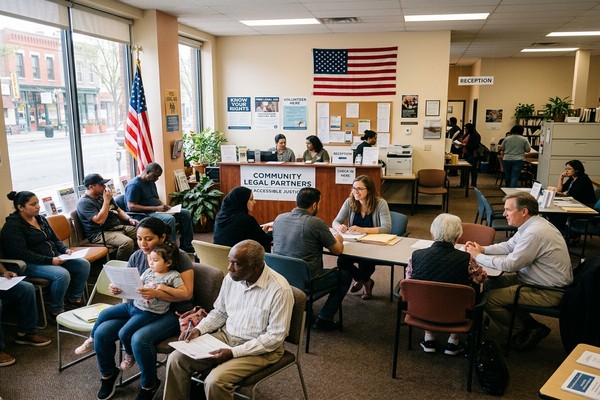
While LSC-funded organizations form the core, pro bono services play an indispensable role in bridging the justice gap. Pro bono, meaning “for the public good,” refers to legal services provided voluntarily by attorneys without charge. These programs are often facilitated by state and local bar associations, law schools, and even private law firms that encourage their attorneys to dedicate a portion of their time to helping low-income individuals.
Pro bono efforts expand access to justice in several ways:
- Volunteer Lawyers: Many experienced attorneys offer their expertise for free, taking on cases that legal aid organizations might not have the capacity to handle.
- Bar Associations: These professional bodies often run pro bono matching programs, connecting individuals in need with volunteer lawyers.
- Online Resources: Platforms like LawHelp.org and Free Legal Answers provide online portals where individuals can find legal information, forms, or even get brief answers to legal questions from volunteer attorneys.
- Private Firm Partnerships: Large law firms often partner with legal aid organizations, dedicating significant resources and attorney hours to complex cases or strategic litigation that can lead to broader systemic change.
- Community Empowerment: Beyond direct representation, pro bono attorneys often participate in “know your rights” workshops and community legal clinics, empowering individuals with knowledge to navigate legal challenges themselves.
These efforts are crucial because the demand for legal aid far outstrips the available resources. Pro bono contributions significantly augment the capacity of the legal aid system, offering specialized expertise and additional person-power. For those seeking highly specialized legal advice, particularly in complex or niche areas, exploring resources that detail firms like Pinkham’s specialized legal services can be beneficial, as they often highlight unique areas of legal expertise.
National and Regional Legal Aid Organizations
Across the country, numerous legal aid organizations work tirelessly to serve their communities. While all are connected to the broader LSC network, many have developed unique strengths and local focuses.
- The Legal Aid Society (NYC): With a legacy spanning 150 years, The Legal Aid Society in New York City is a formidable force for justice. It benefits approximately 2 million NYC residents annually through direct representation, affirmative litigation, and legislative and policy advocacy. Their work is built on the belief that no New Yorker should be denied the right to equal justice, offering services across all five boroughs.
- Legal Services NYC (LSNYC): Another powerhouse in New York, Legal Services NYC helps more than 108,000 New Yorkers obtain basic necessities each year. They are known for using law as a tool for social change, addressing systemic injustices in housing, economic security, immigration, education, and healthcare. They offer multilingual intake services, ensuring accessibility for diverse communities.
- Community Legal Services (CLS) Philadelphia: CLS in Philadelphia has been providing free civil legal assistance for 60 years. They combine legal aid with social work and advocacy, tackling interconnected needs like housing, food, and employment. CLS is also a strong advocate for critical policy changes, fighting inequity and poverty through a blend of direct client services and systemic reform.
- Texas RioGrande Legal Aid (TRLA): Serving a vast area of South and Southwest Texas, TRLA is one of the largest and most respected legal aid providers in the country. They handle a wide range of civil issues, including those specific to agricultural workers, border communities, and disaster survivors, demonstrating the diverse needs met by regional organizations.
These examples illustrate the vital role played by both national funding bodies and local organizations in delivering justice.
Addressing the Justice Gap for Vulnerable Populations
The “justice gap” refers to the significant disparity between the civil legal needs of low-income Americans and the resources available to meet those needs. Millions of individuals face critical legal problems each year without the ability to afford an attorney, leaving them vulnerable to unfair outcomes that can devastate their lives. Legal aid services are specifically designed to address this gap, with a particular focus on vulnerable populations who often face compounded challenges.
Data shows that women comprise 70% of LSC legal aid clients, highlighting the disproportionate impact of legal issues on women, often related to domestic violence, child custody, and economic insecurity. Beyond gender, legal aid tailors its services to meet the special needs of various groups:
- Veterans: Many veterans struggle with issues like benefits appeals, housing instability, and consumer debt. Legal aid helps them access the support they’ve earned.
- Seniors: Older adults often require assistance with estate planning, healthcare directives, protection against elder abuse, and navigating complex public benefits.
- Immigrants: Legal aid provides crucial support for immigrants facing deportation, seeking asylum, or navigating complex visa and naturalization processes. These cases can be incredibly complex, requiring specialized knowledge and compassionate advocacy. For those navigating the intricacies of immigration law, particularly in defense against removal, understanding resources focused on ICE insider immigration defense can be invaluable.
- Victims of Domestic Violence: As mentioned, legal aid is a lifeline for survivors, helping them secure safety through restraining orders, child custody arrangements, and support to rebuild their lives.
- Disaster Survivors: When natural disasters strike, legal aid organizations are on the front lines, helping survivors with FEMA appeals, insurance claims, and housing issues.
Specialized Support for Victims and Survivors
The legal system can be a powerful tool for protecting victims and survivors of violence and exploitation. Legal aid organizations provide specialized support to ensure their safety and help them achieve stability.
- Domestic Violence: For individuals experiencing domestic violence, securing a restraining order is often the first critical step towards safety. Legal aid attorneys assist with obtaining these orders, establishing sole custody of children, and navigating the legal separation or divorce process.
- Human Trafficking: Victims of human trafficking often require comprehensive legal assistance, including help with T Visas (for victims of severe forms of trafficking), VAWA (Violence Against Women Act) petitions, and other forms of immigration relief, as well as assistance with criminal record expungement related to their victimization.
- Crime Victim Advocacy: Beyond specific visas, legal aid offers broader crime victim advocacy, helping individuals understand their rights, access compensation funds, and navigate the criminal justice system as witnesses or victims. Safety planning, which involves developing strategies to reduce risk and enhance personal safety, is often integrated into legal assistance.
- Emergency Protection Orders: In situations of immediate threat, legal aid can help individuals quickly obtain emergency protection orders, providing a legal shield against further harm.
Legal Aid in Times of Disaster
Natural disasters leave a trail of devastation, not just physically, but also legally and financially. Legal aid organizations step in to provide critical assistance when communities are most vulnerable.
- FEMA Appeals: After a tropical storm or other disaster, many survivors find their initial FEMA applications denied. Legal aid attorneys help them navigate the complex appeals process, often overturning denials and securing much-needed aid for housing and recovery. One example highlights a farmer in North Carolina whose livelihood was saved after legal aid helped overturn a denied FEMA claim.
- Livelihood Protection: Beyond direct aid, legal services assist with insurance disputes, contractor fraud, and property title issues, all of which are common after disasters and can hinder long-term recovery.
- Disaster Recovery Grants: Legal aid helps individuals understand and apply for various disaster recovery grants and low-interest loans.
- Housing Rehabilitation and Title Clearing: Ensuring clear property titles is essential for rebuilding. Legal aid assists with these complex property law issues, helping families regain stability.
Economic Impact and the Return on Investment in Legal Aid
Investing in civil legal aid is not just a matter of social justice; it’s a sound economic decision. Numerous studies, including over 50 conducted across the country, consistently demonstrate a significant return on investment (ROI) for every dollar spent on legal aid. The average finding is that for every $1 invested in civil legal aid, it returns an average of $7 to the local and national economy.
This impressive ROI comes from various sources:
- Community Stability: Preventing evictions and foreclosures reduces homelessness, which in turn lowers costs associated with emergency shelters, healthcare for the unsheltered, and social services.
- Healthcare Savings: When individuals can access public benefits like Medicaid or resolve legal issues that impact their health (e.g., unsafe housing conditions), it leads to better health outcomes and reduces reliance on expensive emergency room visits.
- Foster Care Reduction: Legal aid in family law matters can help keep families together safely, reducing the need for costly foster care placements.
- Increased Income and Tax Revenue: Helping individuals secure employment, recover unpaid wages, or access benefits like Social Security or veterans’ benefits increases their income, contributing to the tax base and stimulating local economies.
- Consumer Protection: Preventing predatory practices saves individuals money and protects their assets, fostering economic stability.
Measuring the Social Value of Justice
The impact of legal aid extends far beyond monetary returns, encompassing profound social value. This is often measured through:
- Affirmative Litigation and Policy Change: Legal aid organizations engage in strategic litigation and legislative advocacy to challenge discriminatory practices, improve laws, and create systemic reforms that benefit entire communities. For example, some organizations have successfully fought against unconstitutional laws that prevent individuals with criminal records from obtaining certain jobs, opening pathways to employment.
- Poverty Alleviation: By addressing the root causes of legal problems that trap people in poverty-such as housing instability, lack of income, and domestic violence-legal aid directly contributes to poverty alleviation.
- Social Work Integration: Many legal aid providers integrate social workers into their teams, offering a holistic approach that addresses not just legal issues but also the underlying social and economic challenges their clients face. This comprehensive support leads to more sustainable outcomes.
- Community Justice: Legal aid fosters community justice by empowering individuals and groups to assert their rights, hold powerful entities accountable, and participate more fully in society. Initiatives like celebrating a “Fair Workweek” demonstrate how legal advocacy can lead to tangible improvements in workers’ lives.
The social value of justice is immeasurable, contributing to a more equitable and functional society where everyone has the opportunity to thrive.
Accessing Resources and Self-Help Tools
Finding legal help can seem daunting, but a wealth of resources exists to guide individuals toward the assistance they need. Whether it’s finding a local legal aid office or utilizing self-help tools, the goal is to make legal support more accessible.
One of the most valuable resources for self-help is LawHelp.org. This national portal provides information about legal questions and offers free legal forms. It also features LawHelp Interactive, a tool that allows users to create legal documents for various issues, such as housing, family law, and debt collection. These interactive document creators can be incredibly helpful for individuals who need to complete routine legal paperwork but cannot afford an attorney. Similarly, platforms like Rocket Lawyer offer tools for creating and signing legal documents online, providing a more affordable alternative for many common legal needs.
Navigating the Search for Local Help
For those seeking direct legal representation or advice, several tools and avenues can help locate local legal aid organizations:
- LSC Search Feature: The Legal Services Corporation website (LSC.gov) offers a straightforward search feature where you can enter your address or ZIP code to find an LSC-funded legal aid organization near you. This is often the first and most direct step for low-income individuals.
- LawHelp.org: In addition to self-help resources, LawHelp.org also functions as a directory. You can choose your state or use a map to locate nonprofit legal aid providers in your area.
- State-Specific Directories: Many state bar associations and legal aid commissions maintain their own directories of legal service providers.
- Community Centers and Libraries: These local hubs often have information about legal aid clinics or can direct individuals to relevant resources.
- Multilingual Access Lines: Many larger legal aid organizations, such as Legal Services NYC, operate multilingual access lines, ensuring that language barriers do not prevent individuals from seeking help. Intake specialists are trained to assess needs and make appropriate referrals.
These resources are designed to simplify the process of connecting individuals with the legal assistance they need, empowering them to address their legal challenges effectively.
Frequently Asked Questions about Legal Services
Navigating legal services can bring up many questions. Here, we address some of the most common inquiries.
Who qualifies for free or low-cost Legal Services?
Eligibility for free or low-cost legal services primarily hinges on income and asset limitations. Generally, individuals and households must have an annual income at or below 125% of the federal poverty guidelines. For example, in 2025, this meant an individual income of $19,563 or $40,188 for a family of four. However, specific programs may have slightly different thresholds or may offer services to individuals up to 200% of the poverty line if they fall into certain vulnerable categories. An asset test is also typically applied to ensure that individuals with significant financial holdings do not qualify. Special priority groups, such as victims of domestic violence, seniors, veterans, and individuals with disabilities, may receive priority or have slightly adjusted eligibility criteria.
How can I find a legal aid organization near me?
Finding a legal aid organization near you is relatively straightforward using online tools. The most direct method is to visit the Legal Services Corporation (LSC) website (LSC.gov) and use their search feature by entering your ZIP code or city. Another excellent resource is LawHelp.org, which allows you to select your state or use an interactive map to find local nonprofit legal aid providers and access free legal information and forms. Additionally, your state or local bar association websites often have directories of legal aid services. Many community centers and public libraries can also provide information or referrals to local legal clinics and assistance programs. For non-English speakers, many larger legal aid organizations offer multilingual access lines with intake specialists to assist in various languages.
What is the difference between civil and criminal legal aid?
The fundamental difference between civil and criminal legal aid lies in the nature of the legal issue and the constitutional right to counsel. In criminal legal aid, the Sixth Amendment to the U.S. Constitution guarantees the right to legal assistance for individuals accused of a crime who cannot afford an attorney. This ensures that everyone has a fair defense, regardless of their financial status. Criminal legal aid attorneys represent clients in cases involving offenses against the state, such as theft, assault, or drug charges.
Civil legal aid, on the other hand, addresses legal problems that do not involve criminal charges. There is no constitutional right to a lawyer in most civil cases. These matters impact an individual’s safety, subsistence, and family stability. Civil legal aid attorneys help with issues like housing (evictions, foreclosures), family law (domestic violence, child custody, divorce), employment disputes (wage theft, discrimination), public benefits (Social Security, SNAP), consumer debt, and immigration. The goal of civil legal aid is to ensure equal access to justice for low-income individuals facing these critical life challenges.
Conclusion
Navigating the complexities of the legal system can be a daunting experience, especially for those facing economic hardship. However, as we’ve explored, a robust network of legal services exists to bridge the justice gap for low-income Americans. From the foundational support provided by the Legal Services Corporation (LSC) to the invaluable contributions of pro bono attorneys and dedicated regional organizations, the commitment to equal justice is evident.
These services address critical civil legal issues, offering a lifeline in matters of housing, family stability, employment, and public benefits. They provide specialized support to vulnerable populations-veterans, seniors, immigrants, victims of domestic violence, and disaster survivors-ensuring that their unique needs are met with compassion and expertise. The economic impact of this work is undeniable, with every dollar invested yielding a significant return, fostering community stability and reducing societal costs.
Access to legal services is about empowerment through law. It’s about ensuring that everyone, regardless of their financial situation, has the opportunity to understand and assert their rights, allowing them to participate fully and fairly in society. We encourage individuals to utilize the available resources, such as LawHelp.org and LSC’s search features, to find the help they need. For those who wish to get involved, supporting legal aid through donations, volunteering, or advocacy is a powerful way to contribute to a more just and equitable society for all.